Expat Coaching Basel
Nervous System & Relational Work

Moving to Basel changes more than your address.
Whether you came here for love, for work, or for a completely new beginning — sometimes the biggest transition doesn’t happen around you.
It happens within you.
What often feels personal, confusing, or exhausting in these moments may simply be your nervous system adapting to more than it is used to handling.
My work helps you stay connected to yourself in times of change, pressure, and emotional complexity.
Understanding how your nervous system responds under these conditions can restore clarity and create a different kind of stability.
In critical moments, we don’t act from what we understand.
We act from what we have embodied.Madhava
Living in a new country brings more than visible change
Moving to a new country often begins with a clear reason — a job, a relationship, or a new phase in life.
But beyond that decision, a more complex reality unfolds.
You are adapting to new structures, new expectations, and a different social and cultural environment.
Even when things seem to work on the surface, this ongoing adjustment requires continuous orientation.
Why trauma-informed coaching is the right response here
Under pressure, your nervous system becomes more automatic. It falls back on coping strategies from the past. What becomes dominant is often miscalibrated for the situation you are in.
It is fast. It is familiar. But it reduces flexibility.
And flexibility is exactly what this situation requires.
These patterns did not develop randomly. In many cases, they were formed in situations where you had to handle intensity, uncertainty, or relational stress without sufficient support.
You learned to manage on your own. This may be part of what made you perform at a high level.
What was missing was not effort or intelligence — but the conditions to develop more flexible ways of responding.
What is needed is a way of working that understands how these patterns formed — and how they operate under pressure.
You cannot solve pattern-driven responses with solution-level interventions.
When your relationship becomes part of the overall load
Relocating for work does not only affect your professional life. It also changes the structure of connection, support, and belonging.
Relationships often become part of what has to be reorganized.
You arrive alone and begin looking for connection
You came for work and are building a new life from scratch. At the same time, you may be looking for closeness, partnership, or a sense of belonging. The challenge is that connection does not happen in a vacuum. It unfolds while your system is already dealing with high demand, uncertainty, and constant adaptation.
You move for a partner and depend on them in many ways
You relocate because of a relationship. This can create closeness, but also a strong dependency on your partner for orientation, language, social contact, and everyday stability. That dependency can place pressure on the relationship very quickly, even when the bond itself is loving and strong.
An existing relationship changes its structure
The relationship already exists, but relocation changes how it functions. This may mean temporary long-distance, different timelines, or the challenge of staying connected while both partners are adapting to new realities. What becomes difficult is often not the relationship itself, but the strain of reorganizing it under pressure.
You are the one who goes first
Sometimes one person moves first and has to prepare the ground for a partner or family to follow later. This can mean carrying responsibility on several levels at once: work, housing, administration, orientation, and the emotional weight of being the one who has to make the transition possible for others. That role can create a very particular form of pressure — because you are not only adapting for yourself.
Different scenarios. The same underlying challenge: connection has to reorganize under pressure.
This is where the work begins — not with strategies, but with the system that carries them.
What this situation really requires
My work offers a neuroscience-based approach to the actual structure of inner reality — and to the real needs that arise within it.
This approach is called the NEURO-Buddy Method.
It starts from a simple observation: what happens under pressure cannot be understood only on the level of thought, intention, or behavior.
It has to be understood on the level of the nervous system.
The NEURO-Buddy Method looks at how your system organizes under stress, which patterns become automatic, what reduces flexibility, and what helps new responses become possible.
Its focus is not on correcting you. Its focus is on understanding the actual conditions under which your inner system learned to function.
From there, a different kind of change becomes possible: not through pressure, but through clarity, regulation, and a more supportive relationship with what is happening inside.
I support you in understanding the inner logic of your own experience.
When that understanding becomes embodied, the dynamics through which you meet life begin to shift.
Not because everything around you changes — but because you experience yourself differently within it.
What shapes my work
Depth that cannot be learned from theory alone — and an approach grounded in neuroscience, relationship, and lived experience.
Trauma-informed and non-pathologizing
A clear, respectful way of working that does not add pressure, but helps make your inner dynamics understandable.
Neuroscience-based
My work is grounded in the nervous system, attachment, and the actual conditions under which human beings adapt and relate.
Embodied, not merely conceptual
I do not work only with ideas. I work with what is lived, organized, and carried in the system.
Focused on real inner needs
Not on self-optimization from the outside, but on understanding what your inner system actually needs under pressure.
Relationship-aware
Because connection, stress, and adaptation cannot be separated when life is being reorganized in a new environment.
Integration instead of control
The goal is not to suppress patterns, but to understand them and create the conditions for different responses.
Personal intercultural experience
I know from lived experience what it means to navigate life, love, and meaning across languages and cultures.
English or German
Sessions in Riehen/Basel or online worldwide.
Why this context is personal to me
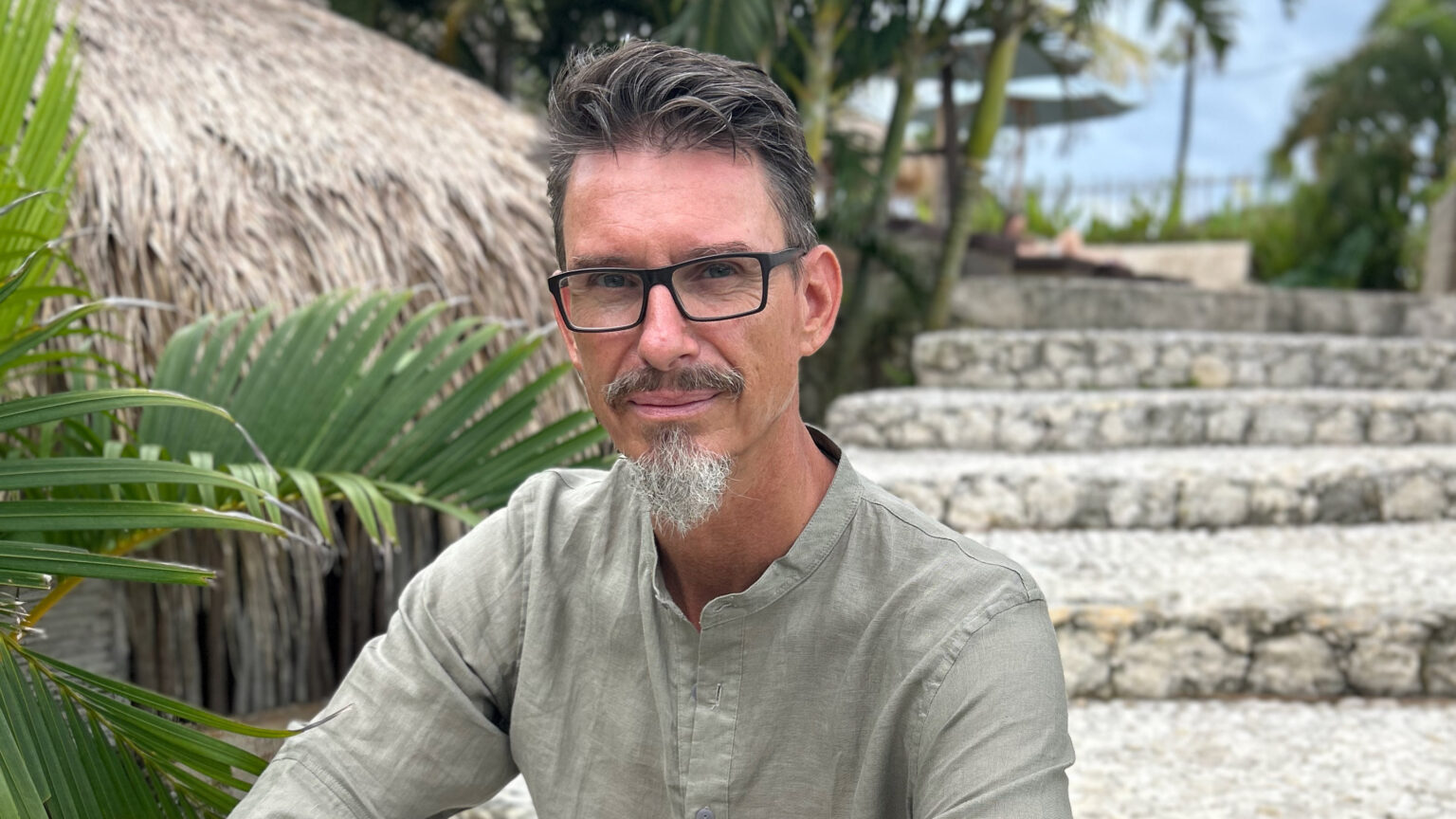
My connection to this work is not only professional.
I am German and live in Basel myself. Even when the cultural distance may appear small from the outside, living in another country still requires adaptation.
Belonging does not transfer automatically. Neither does communication, orientation, or the sense of feeling at home.
I have also been in several intercultural relationships in which English was the shared language. This has given me direct experience of how much nuance can matter — especially in vulnerable moments, conflict, or emotional misunderstanding.
Language is never just a tool for communication.
It also carries safety, identity, and emotional precision.
I have lived in New York and, through my previous profession, traveled extensively around the world. These experiences have shaped how I listen, how I read relational nuance, and how I understand the subtle challenges that arise when people live, love, and try to belong across cultures.
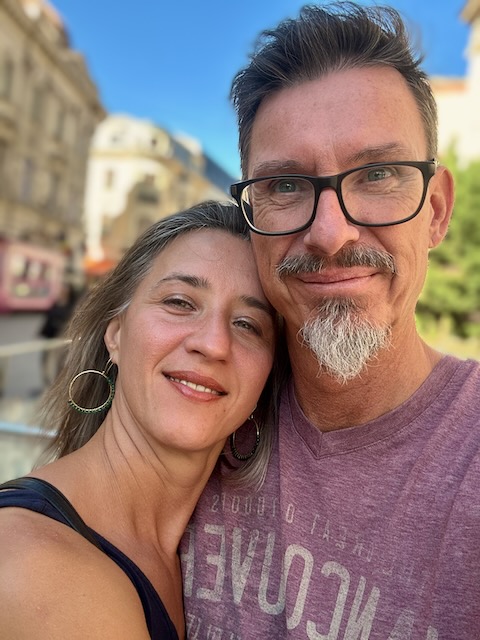
I share my life with Viviana, who is originally from Eastern Europe. So the expat experience is not only part of my work, but part of our everyday life.
If this way of working speaks to you, you are welcome to get in touch.
 Long-form article · 19.04.2026Why Living Abroad Can Feel So Hard — The Deeper ReasonsRead the article →